
February 3, 2026
Tipón, the Inca archaeological park dedicated to water worship
One of the most important archaeological monuments in Cusco is Tipón, an Inca site intended for administrative and ceremonial activities, but primarily it served as a sacred space for water worship. Learn more about this incredible place, how to get there, tickets, the ideal route, and tips for your visit.
General Information
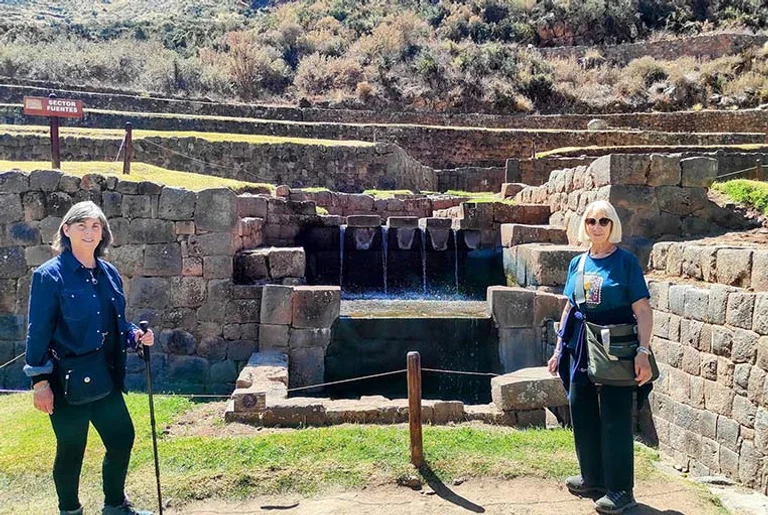
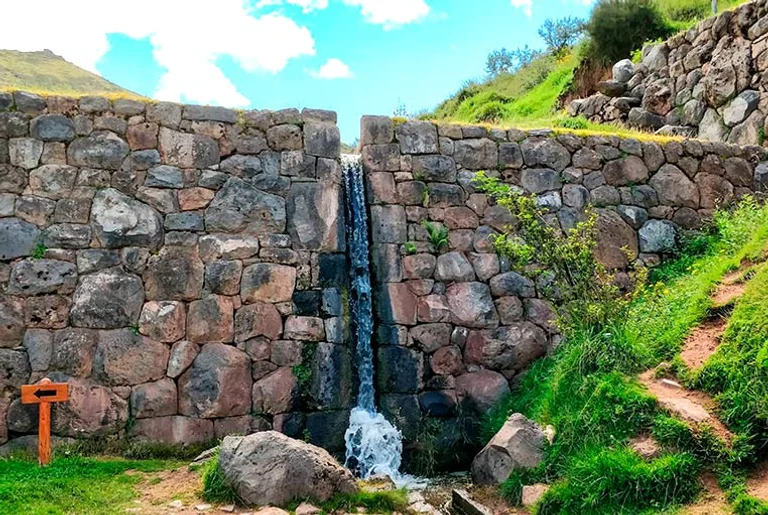
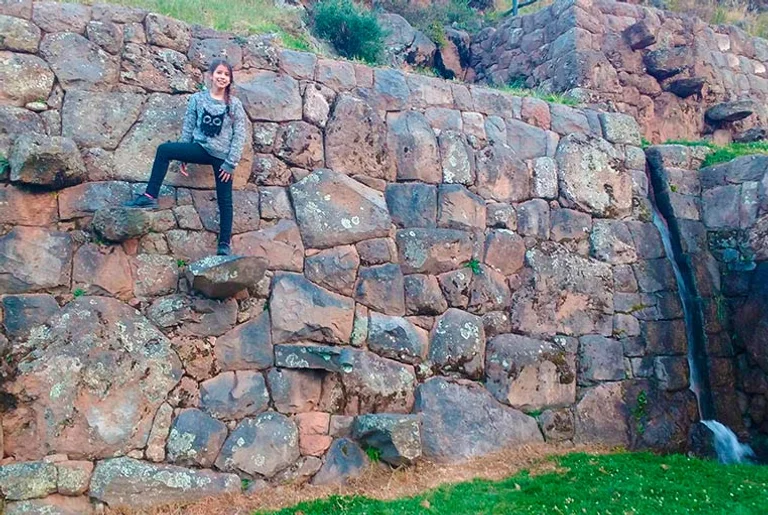
The Tipón archaeological park is popularly known as the hydraulic engineering masterpiece of the Inca Empire, thanks to its water supply system for agricultural, ceremonial, and domestic purposes. Moreover, the site features large structures of channels, fountains, and reservoirs that still function today.
It is believed that the name Tipón comes from the Quechua word “Timpuj,” which means “to be boiling,” possibly referring to the way the water from the fountains bubbles up as if boiling.
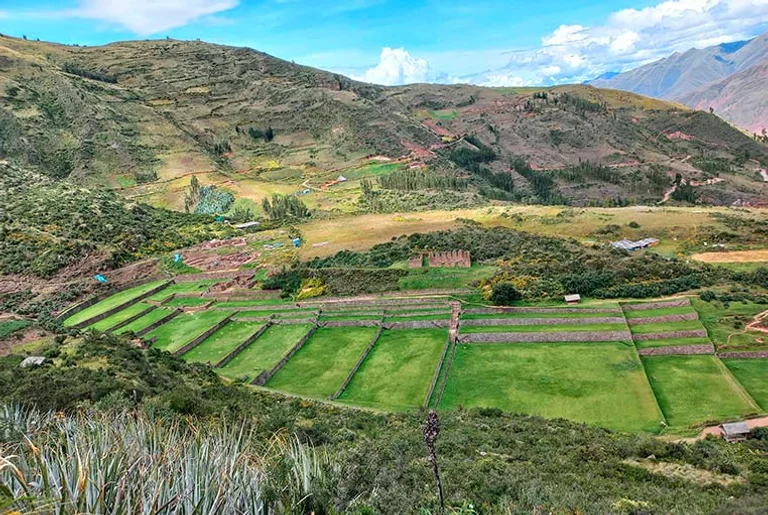
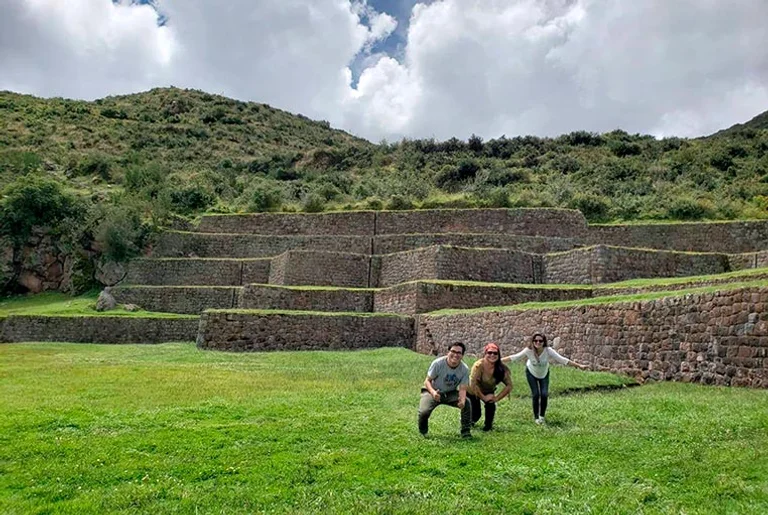
This site also contains some of the largest irrigation works alongside agricultural terraces. Additionally, there are areas that served as living quarters and storage spaces, intact canals, and Inca roads alongside irrigation channels.
The total area of the Tipón archaeological park is 240 hectares, where the main attractions, aside from the hydraulic constructions, include: the royal quarters, the Intihuatana (a structure honoring the sun), the Cruzmoqo viewpoint, and the large 4-meter wide and 10-meter high wall.
Where is Tipón?
The Tipón archaeological park is located in the community of Choquepata, district of Oropesa, province of Quispicanchi, approximately 25 kilometers from the city of Cusco (about a 45-minute drive).
The average altitude of the archaeological site is 3,430 meters above sea level. From here, visitors can enjoy views of large mountains, snow-capped peaks, and agricultural fields of the Southern Valley.
Tickets and Fees
To visit Tipón and its Inca structures, you need to purchase the Cusco tourist ticket for circuit 2, which can be bought in person or online through the Boletocusco website.
With the circuit 2 tourist ticket, you can not only visit the Tipón archaeological park but also the Piquillacta archaeological site, the Qosqo Center for Native Art, the monument to Pachacutec, the Regional Historical Museum, the Contemporary Art Museum, the Qoricancha site museum, and the Popular Art Museum.
The partial Cusco ticket for circuit 2 costs $29 for foreigners and $19 for Peruvians. The ticket is valid for two days.
The Comprehensive Cusco Tourist Ticket
To visit Tipón, you can also purchase the Comprehensive Cusco Tourist Ticket, which includes entry to ten archaeological sites (Cusco, Sacred Valley, and Southern Valley), five museums, and one cultural center. The price for this ticket is $50 for foreigners and $30 for Peruvians (students of any nationality pay $30). One of the great benefits of the Comprehensive Tourist Ticket is its longer validity, as it can be used for 10 days.
Visiting Hours
The Tipón archaeological park is open daily from 07:00 AM to 05:00 PM.
The best time to visit Tipón is in the morning, to enjoy cooler and warmer weather. Additionally, it is a great opportunity to maximize your time and combine the visit with nearby destinations in the Southern Valley of Cusco.
Recommended Tour
When traveling to Tipón, you can enjoy a much more complete experience thanks to the nearby tourist attractions that are part of the Southern Valley of Cusco. If you purchased the Cusco tourist ticket for circuit 2, you can also include visits to the main museums in the city as part of your tour.
- Start of the tour: The ideal route to explore Tipón, along with the Cusco tourist ticket for circuit 2, starts in the city of Cusco in the morning, from where the journey heads towards the Southern Valley. Many tours offer this route (visiting the Tipón archaeological park, the Piquillacta archaeological site, and the town of Andahuaylillas) in a nearly 6-hour experience, giving you time in the afternoon to visit museums on your own.
- Tipón Archaeological Park: After an hour of travel, you will reach the Tipón archaeological park, the main Inca structure dedicated to water worship, where you will learn more about the hydraulic engineering of this culture.
- Piquillacta Archaeological Site: Continuing along the route, just a few minutes away, you will arrive at the Piquillacta archaeological site, a pre-Inca city of the Wari culture, the best-preserved site in all of Peru.
- Town of Andahuaylillas: To conclude the classic tour of the Southern Valley, you have the option to visit the town of Andahuaylillas (20 minutes by car). In this place, you will find the famous Church of San Pedro Apóstol, also known as the Sistine Chapel of America.
- Visit to museums and cultural centers: After completing the tour of the Southern Valley and returning to the city of Cusco, you can visit the museums included in the circuit 2 of the tourist ticket (Qoricancha site museum, Regional Historical Museum, Contemporary Art Museum, Popular Art Museum, and the Pachacutec monument). Remember that most museums close by 06:00 PM. Additionally, you can visit the Qosqo Center for Native Art, which has daily performances at 07:00 PM (also included in the circuit 2 of the Cusco tourist ticket).
- End of the tour: In the evening, the recommended tour would end with a visit to the Tipón archaeological park. Since the circuit 2 tourist ticket is valid for two days, you can spread these experiences in whatever way suits you best.
Tips for Your Visit
- To get the most out of your visit to Tipón, we recommend purchasing the Cusco tourist ticket for circuit 2. However, if you want a more comprehensive ticket to visit the region’s most important attractions, including Tipón, we recommend the comprehensive ticket that includes ten archaeological sites, five museums, and one cultural center.
- Tipón is located in one of the most scenic areas of Cusco, where you can enjoy views of valleys, mountains, snow-capped peaks, lagoons, agricultural fields, and a wide variety of Andean wildlife.
- Visit Tipón in the morning, as it offers the best lighting and weather to thoroughly explore each of the historical structures and the hydraulic engineering of the Inca culture.
- The tour of Tipón is light, and you will not have to exert yourself physically. The total visit will take approximately 45 minutes.
- For a more informed and safer visit, it is highly recommended to explore the archaeological park with a professional guide. Remember to book this service in advance.
- Tipón is located at an altitude of 3,430 meters above sea level, so it is essential to acclimate in the city of Cusco beforehand to avoid altitude sickness. During the first days of your trip, it’s ideal to engage in light activities, drink plenty of water, and avoid heavy meals.
- Combine your visit to Tipón with nearby tourist destinations such as the Piquillacta archaeological site, the town of Andahuaylillas, and the Huacarpay lagoon.
- Remember that through Boletocusco, you can purchase the comprehensive Cusco tourist ticket, as well as partial tickets for each of the three circuits. Book now and experience unforgettable moments in the millenary city of the Incas.
Frequently Asked Questions
1. Why is Tipón one of the most important archaeological sites in Cusco?
Tipón is important because it stands out as the highest expression of Inca hydraulic engineering. When visiting, you can appreciate how water was used for agricultural, ceremonial, and domestic purposes through channels, fountains, and reservoirs that still function today.
2. What function did Tipón serve in Inca times?
Tipón was an administrative and ceremonial site, but primarily a sacred space dedicated to water worship. During the visit, we explain how this element was central to the Andean worldview and the organization of the empire.
3. Where is Tipón located?
Tipón is located in the community of Choquepata, in the Oropesa district, about 25 kilometers from the city of Cusco. The drive takes approximately 45 minutes and passes through beautiful landscapes of the Southern Valley.
4. What is the altitude of Tipón Archaeological Park?
The Tipón archaeological park is located 3,430 meters above sea level. Therefore, it is highly recommended to acclimatize during the first days of your trip in the city of Cusco to enjoy the visit without any altitude-related issues.
5. How can I enter the Tipón Archaeological Park?
To enter, you need to purchase the Cusco Tourist Ticket for Circuit 2. This ticket also includes access to the Piquillacta archaeological site, the Qosqo Center for Native Art, the Pachacutec monument, the Regional Historical Museum, the Contemporary Art Museum, the Qoricancha site museum, and the Popular Art Museum.
6. How much does it cost to enter Tipón?
The partial tourist ticket for Circuit 2 costs approximately $29 USD for foreigners and $19 USD for Peruvians, with a validity of two days. This allows you to organize your itinerary with greater flexibility.
7. What are the visiting hours for Tipón?
The archaeological park is open every day from 07:00 AM to 05:00 PM. The best time to visit is early in the morning to make the most of the weather and lighting.
8. How long does the visit to the archaeological park take?
The visit to Tipón is light and accessible for most people. On average, it takes around 45 minutes, making it an ideal visit to combine with other attractions in the Southern Valley.
9. What are the main attractions within Tipón?
During the visit to Tipón, you will see agricultural terraces, royal enclosures, the Intihuatana, the Cruzmoqo viewpoint, the impressive wall that protected the complex, and the hydraulic systems.
10. Can I combine Tipón with other destinations on the same day?
Yes, it is highly recommended. Tipón is often visited along with Piquillacta and the town of Andahuaylillas, forming the classic route through the Southern Valley of Cusco.